PPT Outline PowerPoint Presentation ID4106948
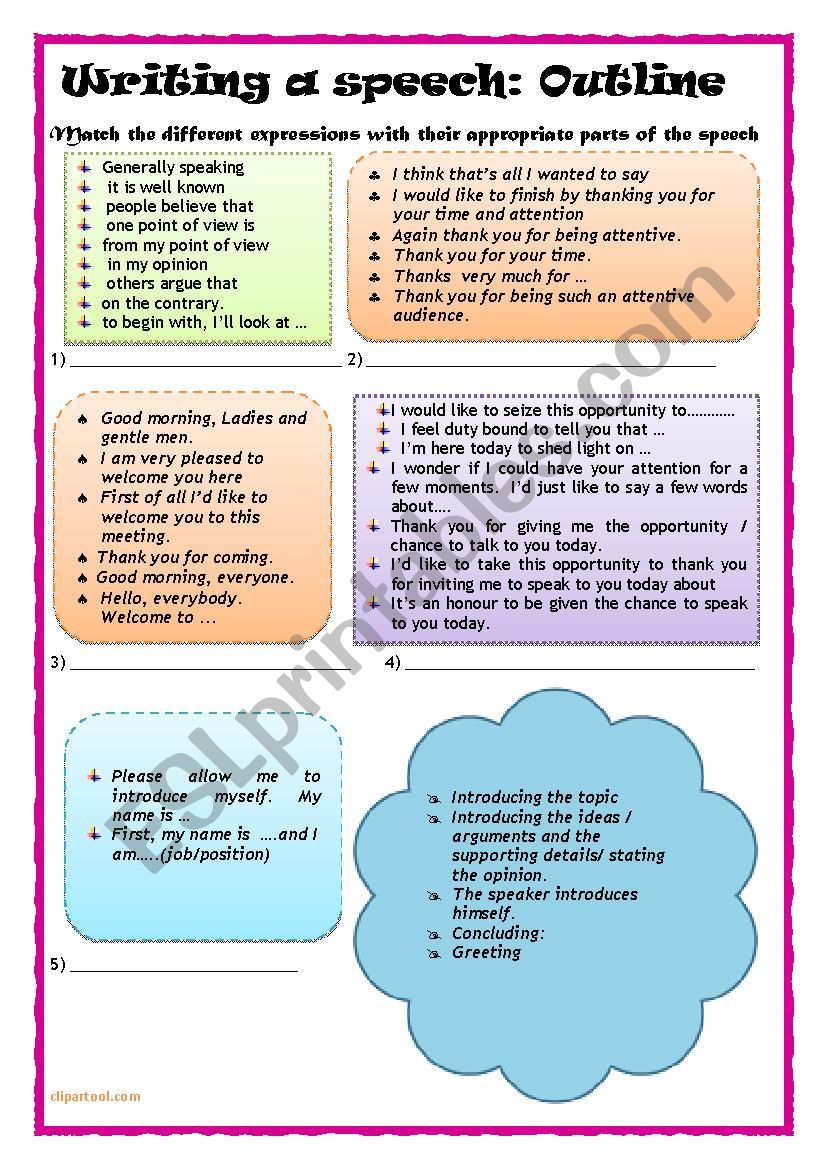
Cover How to write a speech ESL worksheet by chebbiaida26 (826x1169)
Table of Contents
- Step 1: Define the Purpose of Your Speech
- Step 2: Analyze Your Audience
- Step 3: Organize Your Speech
- Step 4: Write the Speech
- Step 5: Practice and Deliver Your Speech
Step 1: Define the Purpose of Your Speech
The first step in writing a structured speech is to determine the purpose of your speech. Ask yourself why you are giving the speech and what you want to achieve. Are you trying to persuade your audience to take action? Are you informing them about a particular topic? Are you entertaining them?
Once you have determined the purpose of your speech, you can start to think about the main message you want to convey. This message should be clear and concise, and it should be something that your audience can easily understand.
Step 2: Analyze Your Audience
The second step in writing a structured speech is to analyze your audience. You need to understand who they are, what they know, and what they expect from your speech.
Start by identifying the demographics of your audience, such as their age, gender, and education level. Then think about their interests, beliefs, and values. This will help you tailor your message to their needs and expectations.
It's also important to consider the context in which you will be delivering your speech. Will it be a formal or informal setting? Will you be speaking to a large group or a small one? These factors will influence the tone and style of your speech.
Step 3: Organize Your Speech
The third step in writing a structured speech is to organize your thoughts and ideas. Start by creating an outline that includes an introduction, body, and conclusion.
In the introduction, you should grab the attention of your audience and provide an overview of what you will be talking about. In the body, you should present your main points and provide supporting evidence. In the conclusion, you should summarize your main points and leave your audience with a clear call to action.
Be sure to use transition words and phrases to help your audience follow along with your speech. Some examples of transition words include "first," "next," and "finally."
Step 4: Write the Speech
Once you have organized your thoughts and ideas, it's time to start writing your speech. Use a conversational tone and avoid using jargon or technical terms that your audience may not understand.
Be sure to use vivid language and examples to help illustrate your points. You can also use rhetorical devices, such as repetition and parallelism, to help make your speech more memorable.
When writing your speech, it's important to keep your audience in mind. Use language and examples that will resonate with them and keep them engaged throughout your speech.
Step 5: Practice and Deliver Your Speech
The final step in writing a structured speech is to practice and deliver your speech. Practice delivering your speech in front of a mirror or with a friend to help you become more comfortable with the material.
When delivering your speech, be sure to speak clearly and at a pace that your audience can follow. Use body language and eye contact to help engage your audience and keep them interested.
Remember to stay focused on your main message and to use your call to action to inspire your audience to take action.
Conclusion
Writing a structured speech may seem daunting, but by following these five steps, you can create a speech that is clear, concise, and engaging. Remember to define the purpose of your speech, analyze your audience, organize your thoughts, write your speech, and practice and deliver your speech. With these steps, you'll be well on your way to delivering a speech that inspires, informs, or entertains your audience.

Post a Comment for "PPT Outline PowerPoint Presentation ID4106948"